
Our commitment to the Maralinga Tjarutja
As the Australian Government’s primary authority on radiation protection and nuclear safety, ARPANSA provides care and guidance to the Australian people and protection of our natural environment. With the cooperation of the Maralinga Tjarutja people, we commit to the ongoing facilitation of truth-telling about the radiological condition of the former British nuclear test sites with the Maralinga Tjarutja Rangers, the Maralinga Land and Environment Management Committee (MLEMC) and other Traditional Owners. As well as our 3-yearly environmental monitoring activities, these conversations will aim to increase confidence amongst Traditional Owners to live upon and use their land as they desire.
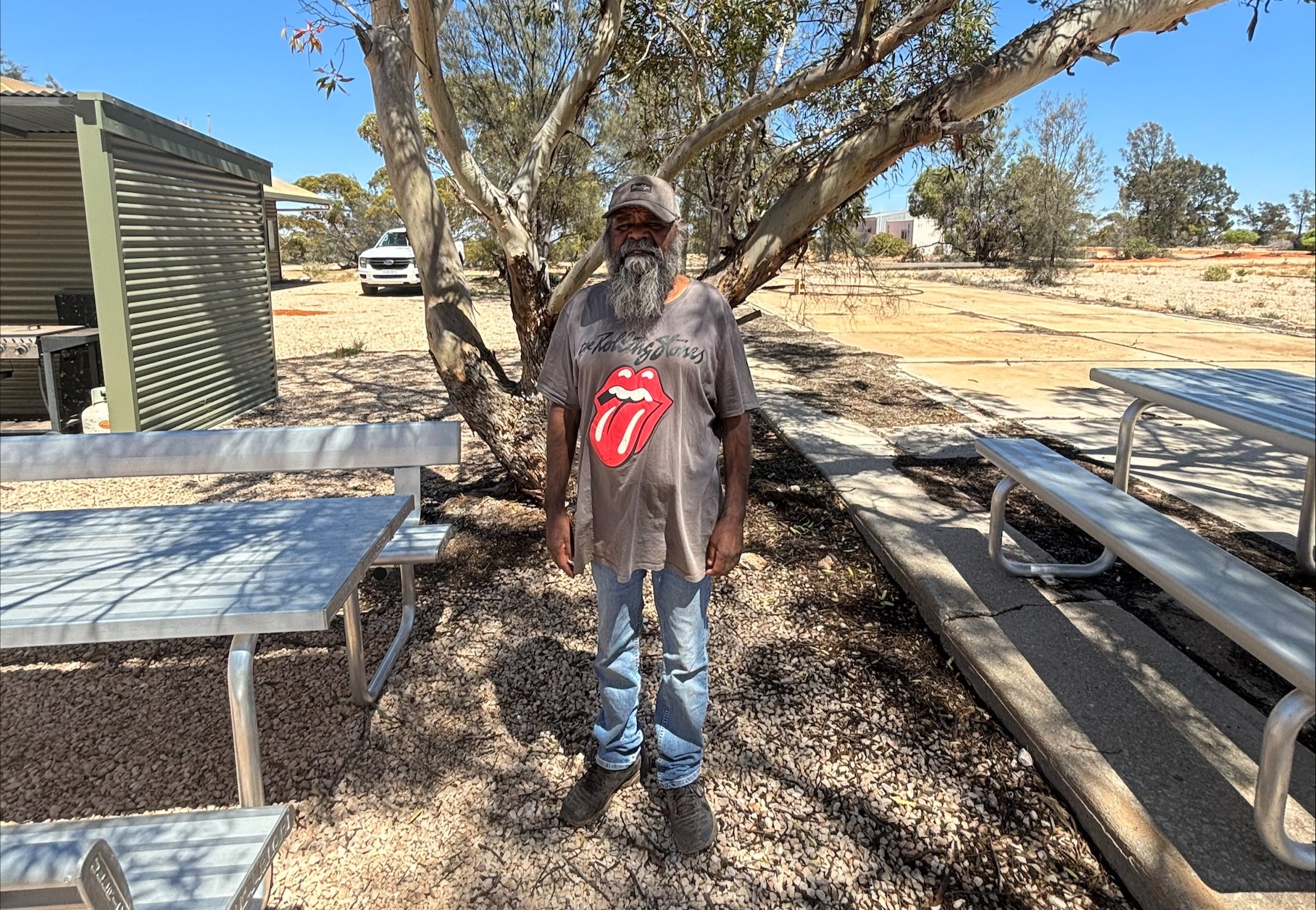
We have learnt a lot from the scientists. We know that that the radiation level is low. It is important that they come out here on the Country which was contaminated. They are the experts. This is a good thing, because they check if there are any high levels.
– Lance Ingomar, Oak Valley Ranger
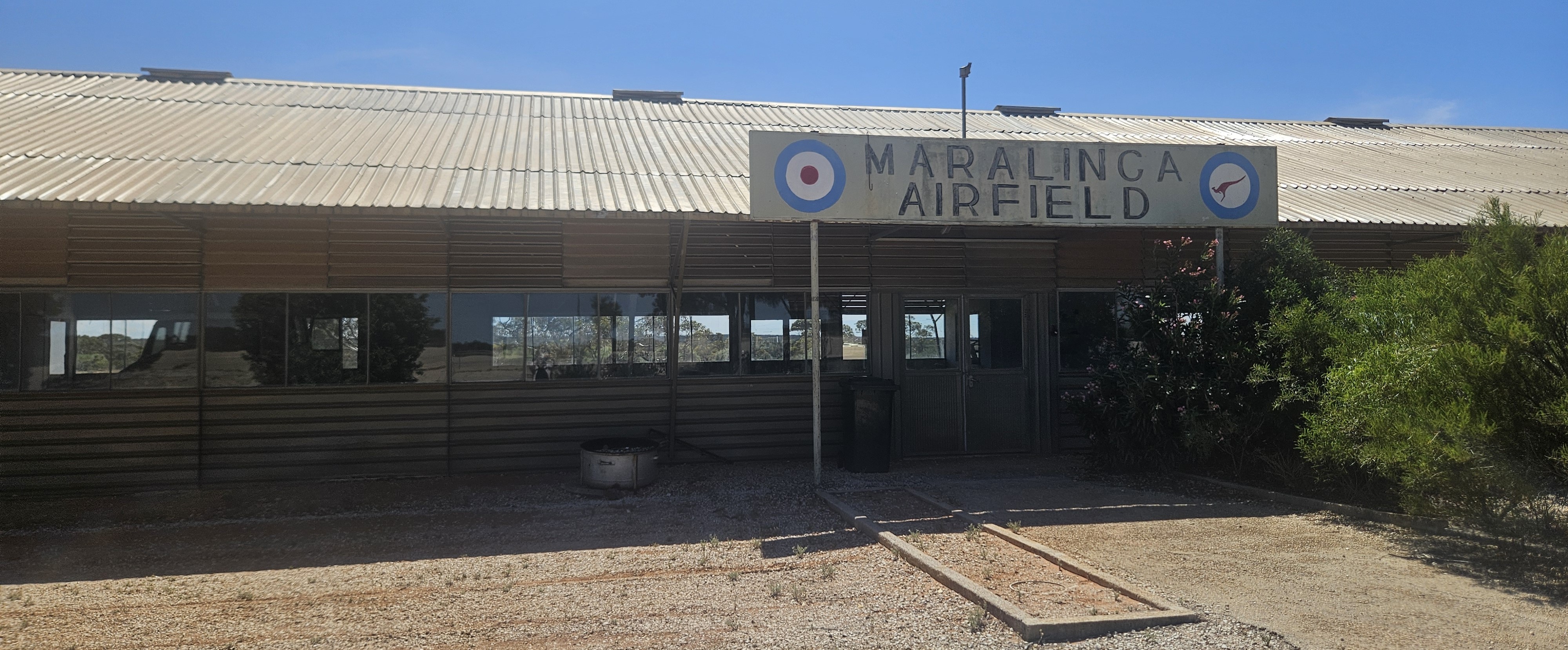
Standing in the abandoned streets of Maralinga village, it is difficult to imagine a time when soldiers and staff cooled off in the pool after a hit on the tennis courts. Yet, between 1955 and 1963, the British built and used this base as part of an atomic test program across Southern and Western Australia. During this period, 12 atomic detonations of major nuclear devices occurred: 3 at the Montebello Islands, 2 at Emu Field and 7 at Maralinga.
Although spanning a brief chapter in the long history of this region, the legacy of this time and its impact on the environment and lives of the Maralinga Tjarutja (MT) Traditional Owners was devastating. Not only did the community suffer from immense social, emotional and physical hardship, but extensive radiological contamination meant that it would be 54 years before the MT could safely return home.
Today, reminders of the testing program – both large and small – are still visible. Co-funded jointly by the British and Australian Government, Maralinga village left a large footprint. Able to accommodate up to 2,000 people, staff had use of laboratories and workshops, shops, a hospital, church, power station, post office, bank, library, cinema and swimming pool. As well as the tennis courts, there were facilities for Australian football, cricket and golf. The airstrip at Maralinga Airport was one of the largest in the southern hemisphere, designed to cater to the enormous carriers that shipped equipment and soldiers to and from the site.
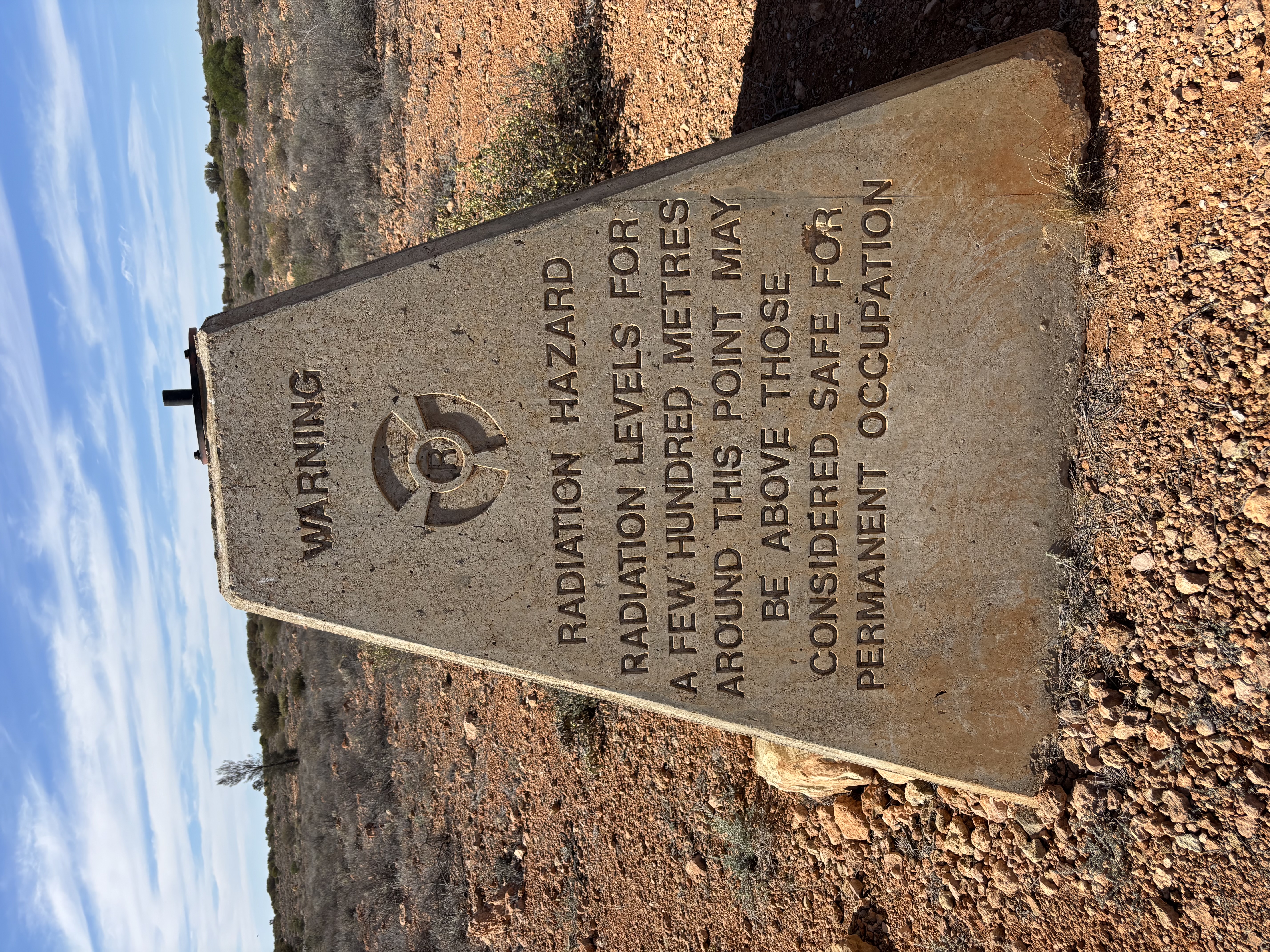
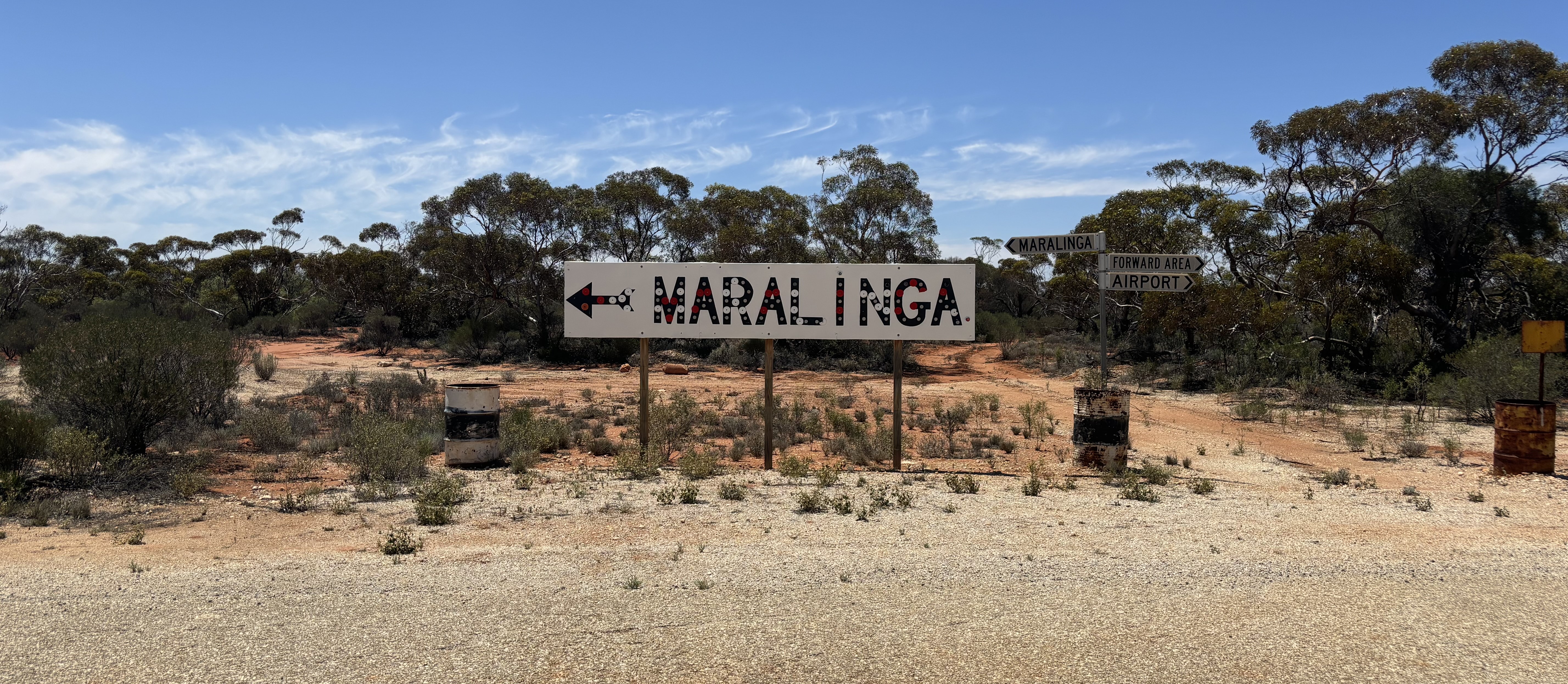
The barracks and sleeping huts are long gone, but the cement slabs remain. The Maralinga Village Museum displays old soda bottles, army trucks, and other remnants left behind by the British. Nearby, the tennis courts are cracked, and the swimming pool filled with rocks and dirt. The surrounding desert is also littered with physical reminders of the nuclear testing. Driving out to the Forward Area, where the British atomic weapon tests were detonated, visitors can spot the skeletal remains of facilities, and photograph themselves next to the 7 plinths which mark the testing zones. Bundles of scrap metal, rusted ammunitions boxes and tangled wire are scattered across the landscape. A series of pits where radiological waste was buried are discretely sign posted.
Maralinga’s remote location, climate, flat terrain, and relatively small population made it an appealing option for the British and Australian Government officials responsible for selecting the testing sites. Located approximately 800 kilometres northwest of Adelaide and 300 kilometres north-west of Ceduna, Maralinga covers approximately 11% of the land area of South Australia and lies within the confines of the Great Victoria Desert, north of the Nullarbor Plain.
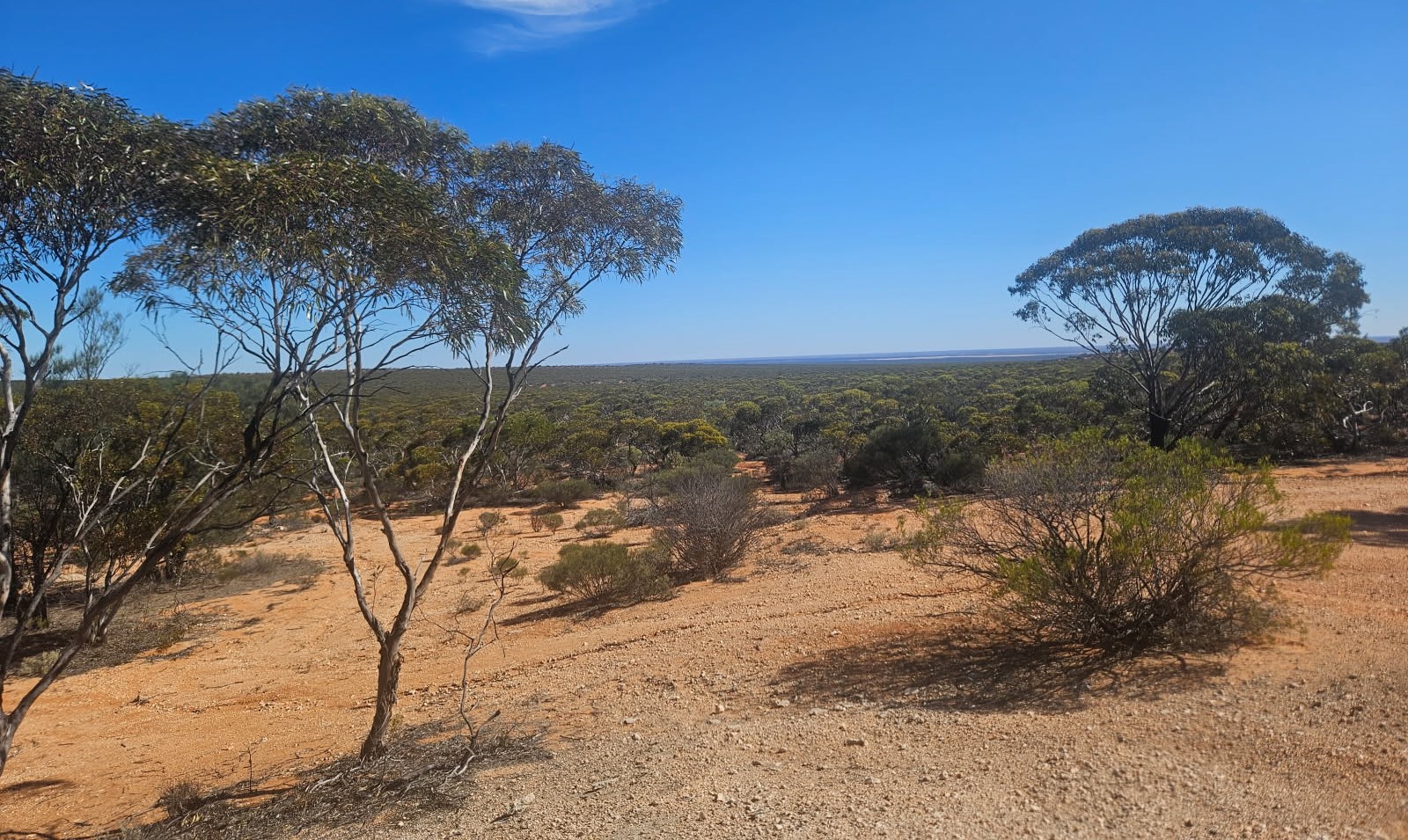
For the Maralinga Tjarutja, this is, and has always been, a place of deep cultural and spiritual connection, woven through songlines, kinship, and cultural practice across countless generations. There are plentiful kangaroos and emus here, although they can be hard to spot under the cover of trees. The environment is varied and the wildlife and flora diverse. Approaching the village, rolling sandhills make way for twisted mulgas and saltbushes, which cling tenaciously to the hard red sand. Before colonisation and forced displacement, locals used well-travelled routes across Country. Water was collected from soaks and rock holes, and bush tucker was abundant and varied.
Half a century on from the testing, the Maralinga village and surrounds have opened up for tourism by the Maralinga Tjarutja Corporation. Visitors can take part in guided tours of the atomic test sites and stay in the Village. Recently, the airstrip was used by the MT community to host the ‘Maralinga Mile’ – a non-competitive test and tune event for Land Speed Record Vehicles. The Oak Valley Ranger Program, which is run from the nearby Aboriginal settlement of Oak Valley, is also having a huge impact on the environmental health of the area, as well as expanding the younger generations’ understanding of bush tucker, connection to, and care for, Country.
But – just like the dusty desert road that takes you here – the journey to this point has been a long and complex one. The desert, and its Traditional Custodians, carry scars from the past. Trust in and reclamation of Maralinga has taken many years, and has been far from simple. For this reason, ARPANSA’s scientists have long understood that periodically testing the site for radiological safety is only part of the story. Running corollary to facts and hard numbers is an ever-evolving human conversation between our scientists and the Traditional Owners – one focused on reassurance, open hearts, and deep listening.
The long road to rehabilitation
In 1994, Australian Radiation Laboratory (ARL) was contracted by the Department of Primary Industries and Energy to provide a wide range of health physics and environmental monitoring services to the Maralinga rehabilitation project. Since then, ARL – which became the Australian Radiation Protection and Nuclear Safety Agency in 1998 – has been engaged with the community for almost 30 years, working to ensure that its members’ needs are both heard and met.
During the remediation, our scientists monitored the numerous debris pits left by the British, as well as the 7 testing sites. ARL also developed comprehensive health physics procedures, such as lung and urine monitoring, to ensure workers were protected from potential radiological hazards. Ownership of the land was fully restored to Traditional Owners in November 2009.
Today, ARPANSA’s Health Physics Measurements team continues to visit the former nuclear test site every 3 years to assess the long-term impacts of historical nuclear tests. These visits provide both an independent assessment of the site and help to support public confidence. In 2024, ARPANSA commenced additional onsite trips to Maralinga every 18 months to increase interaction and knowledge transfer with Traditional Owners. This work is conducted under a Memorandum of Understanding with the Department of Industry, Science and Resources (DISR) and in cooperation with the Maralinga Land and Environment Management Committee (MLEMC). MLEMC includes representatives from Traditional Owners, as well as State and Commonwealth Government bodies. ARPANSA representatives attend MLEMC meetings by invitation from Maralinga Tjarutja and the Department.
‘Two-way’ yarns
Between 1993 and 2001, the Australian Government spent more than $100 million rehabilitating the land following the recommendation of the Royal Commission into British Nuclear Tests in Australia.
ARPANSA’s Dr Stephen Long played an integral role in the remediation and environmental monitoring of Maralinga, after joining the Australian Radiation Laboratory (as we were then known) in 1996. Throughout this time, Stephen spent up to 18 days a month on site, and was involved in a consultative process with the MT Traditional Owners around many aspects of the project. More recently, his team has been responsible for presenting information sessions about the radiological safety of Maralinga to members of the Oak Valley Ranger program.
The successful rehabilitation of the site is now considered international best practice. This is in no small part due to the substantial consultation in those early days between the Traditional Owners and ARL in determining the remediation reference level, and extent of remediation.
In late 2024, shortly before his retirement, Stephen visited Maralinga for the last time. Accompanying him was his colleague of 18 years, Emma Barnes, who has since replaced him in the role of Assistant Director Health Physics Measurements. During this visit, we drove to the Forward Area to check road conditions for some of the monitoring locations. As we drove past the testing sites, Stephen reflected on the delicate and ever-evolving relationship between Government agencies, such as ARPANSA, and the MT Traditional Owners. He also talked about his own connection to the community – one which has spanned 4 generations of Elders.
‘We need to keep fostering the relationship. The Maralinga Tjarutja community had a high level of trust with ARL, and this has continued with ARPANSA. This is in no small part because we have been a constant presence throughout the rehabilitation project. However, our team has to be proactive and keep fostering these connections and keep talking with the community,’ Stephen explained.
‘The important thing is that the conversation about the use of the land is one which is ongoing. And this conversation needs to be about developing trust between the Traditional Owners and the scientists. It should not only be about the cleanup of the land, but also about providing reassurance,’ he added.
Andrew Collett AM, a Barrister from Selby Street Chambers, has been a legal advisor to the MT for more than 40 years. He played a pivotal role in representing their interests both during, and after, the 1984 Royal Commission into British Nuclear Tests in Australia.
‘The future lies in Oak Valley and the community, and particularly the younger generations. Action and change needs to happen on Country, not in offices. Government agencies like ARPANSA have supported this by talking to the community in a language they understand, which has created trust and integrity in the information.’
Andrew believes the seeds of this trust were sown in the 1980s after the Royal Commission, when ‘…the Government took ownership of what happened’. Importantly, he believes this confidence has not yet been breached.
‘Mechanisms such as the MLEMC have helped to maintain this trust, by enabling a continuous relationship and conversation between the various Government and local stakeholders,’ he said.
Although trust has been present between the MT and ARL/ARPANSA from the beginning, one of the challenges the agency faced over the years was the fluctuating nature of community understanding about the radiological safety of the land. The complex history around the testing and clean-up has made it challenging for the MT to venture back to Maralinga. Even after remediation, areas of cultural significance, hunting and water holes were avoided by locals because of fears around contamination. The Ranger Program has been an invaluable means of rebuilding this connection to Country across the generations, as well as an avenue for our scientists to bridge information gaps in the community.
‘As time passed, there has been misinformation about the safety of the land, which has led to the reassertion of suspicion and misinformation. Linking into the Ranger Program has helped us to counteract this issue,’ Stephen said.
Lance Ingomar has been an Oak Valley Ranger for 11 years. As well as natural and cultural resource management, he and his fellow rangers support the management of water holes and cultural sites, the collection and transfer of geographical and cultural traditional knowledge in consultation with Traditional Owners, and cultural activities (including return-to-country trips).
A central focus of the Oak Valley Ranger Program is re-establishing understanding and knowledge of traditional cultural practices and care for the land to younger people that have been eroded by years of community dislocation from Maralinga. I was fortunate to have a yarn with Lance before he set off with his fellow rangers to continue a long standing battle with the invasive buffel grass species through controlled burning. He was accompanied by some fellow rangers, as well as a group of teenagers from the Oak Valley community keen to learn more about the rangers’ work.
I asked him about the early days after the legacy nuclear testing, when the land wasn’t safe to use and live on.
‘When the military base was established at Maralinga in the 1950s, the Maralinga Tjarutja people were relocated to Yalata from Ooldea, where there was a permanent water soak south-east of Maralinga. After the testing, it wasn’t safe to come back. But the old people wanted to come home again. Some people came back too early, before it was safe. That’s why people are nervous about returning. Now people are happy, but we have lost all the old people with the knowledge,’ Lance explained.
The Maralinga Lands were handed back to the Maralinga Traditional Owners by the South Australian Government in December 1984. In the same year, the community of Oak Valley was established using funds provided as compensation for the dispossession of the Maralinga Tjarutja people from their lands. Oak Valley is located about 130 kilometres from Maralinga, and has a fluctuating population of around 80 plus people.
‘In the early days, Oak Valley was just camps, but then it became home, because it all started there for us. Maralinga means ‘high place’. Tjarutja means ‘lower place, down below’. This is where our ancestors lived. There was an old camp at the blowhole. This was the big camp where everybody lived, back in the day,’ Lance explained.
Dispossession and disconnection from traditional lands is a thread which runs through the history of the MT – even before the British set up their base. In the 1920 and 30s, they were moved from the Western Desert to Ooldea Mission, located at a siding on the Trans-Australian Railway line. In 1952, Ooldea was closed and a new mission established by the Lutherans at what is now called Yalata. Many remained here when the Government announced the atomic weapons testing and prohibited civilian access to Maralinga.
The development of Oak Valley community in the 1980s meant that people could return to some of their traditional lands. However, it would be many more years before the testing sites and Maralinga Village were rehabilitated to a point where all but 200 square kilometres were fit for permanent habitation. In November 2009 the Australian and South Australian Governments and Maralinga Tjarutja signed the Maralinga Nuclear Test Site Handback Deed, which gave effect to the return of the test site (Section 400) and Maralinga Village to Maralinga Traditional Owners. There are still restrictions on permanent occupancy within a ‘restricted land-use’ (non-residential) boundary surrounding Taranaki, a former test-site at Maralinga. These are precautionary in nature and are in place as control measures designed to contain any remaining contamination at the site.
Being able to take ownership and control of the land again has been an important step in the community’s healing, although it is an ongoing process – one of, at times, incremental gains. But the difference in trust between the current day and a few years prior has been, in Emma’s eyes, considerable. This transition was visibly demonstrated when Emma took a group of rangers, young locals and members of the MLEMC to one of the pit sites on our visit. The group stood atop the pit with no apparent concern for their safety, signalling a positive shift in community sentiment and perceptions of site safety.
‘A couple of years ago, locals would have been unwilling to venture onto this spot. So, when the young people stood on the pit today, it signalled an amazing transition. Three of the rangers standing here were at our last workshop,’ Emma said.
Emma makes it clear that the partnership between the Health Physics Measurements team and the Maralinga Tjarutja doesn’t have a definitive end-point, and is not a one-way street.
‘Out here, the rangers are teaching us. We do ranger workshops, and they show us how they care for the land.’
Crucially, ARPANSA’s approach to working with the rangers has evolved in response to cultural and communications preferences. The first Knowledge Workshop was held in Ceduna in 2019 in a formal setting. The team has since conceded that, although well intentioned, this was not the most effective approach to connect with and educate the rangers.
‘Our second and third workshops took place in 2024 and 2025 were here, on site. We tried to ensure that the information exchange was on the ranger’s terms, so that they can understand radiation and how it relates to their use of the land. Ultimately, we have to make sure that we explain that the land is safe, not just through our monitoring, but by explaining why. If we are on the land, they can see it is safe,’ Emma said.
For Lance, receiving consistent reassurance from our scientists that the bush tucker in Maralinga is safe to eat, and the lands safe for camping and cooking, is also helping his mob feel confident to step back onto the red soil of Maralinga, and empowered to re-engage with their land.
‘In the 1950s, when the land was contaminated, everyone was afraid. We knew that the land was sick and couldn’t eat the kangaroos. It wasn’t suitable. As soon as the scientists came back and cleared up, it was all right to get kangaroos.’
Lance gestures to the beautiful scenery around us.
‘Now we know it’s safe. Vegetation is coming back. No old people now, but we show kids how to cook, and do knowledge sharing. It’s good now. But you need to be on Country to understand.’