
ARPANSA scientists independently verified radiation levels at the Australian Nuclear Science and Technology Organisation's (ANSTO) Lucas Heights site between July 2024 and July 2025 as part of our role as the independent regulator of Commonwealth agencies that use or produce radiation. ARPANSA’s verification program is in place to validate measurements reported by ANSTO and to ensure compliance with relevant licence conditions. Consistent results between ARPANSA and ANSTO laboratory measurements provide confidence in ANSTO’s monitoring capabilities and ensure ongoing protection of people and the environment.
We conduct quarterly and annual analyses of air filters, bore water, and ground water samples as part of our ongoing independent verification process. The comprehensive analyses confirmed that no samples exceeded site notification levels, indicating that ANSTO’s operations pose no undue risk to the environment or public health.
Figure 1 shows the locations of air and water samples validated by ARPANSA as part of this program.
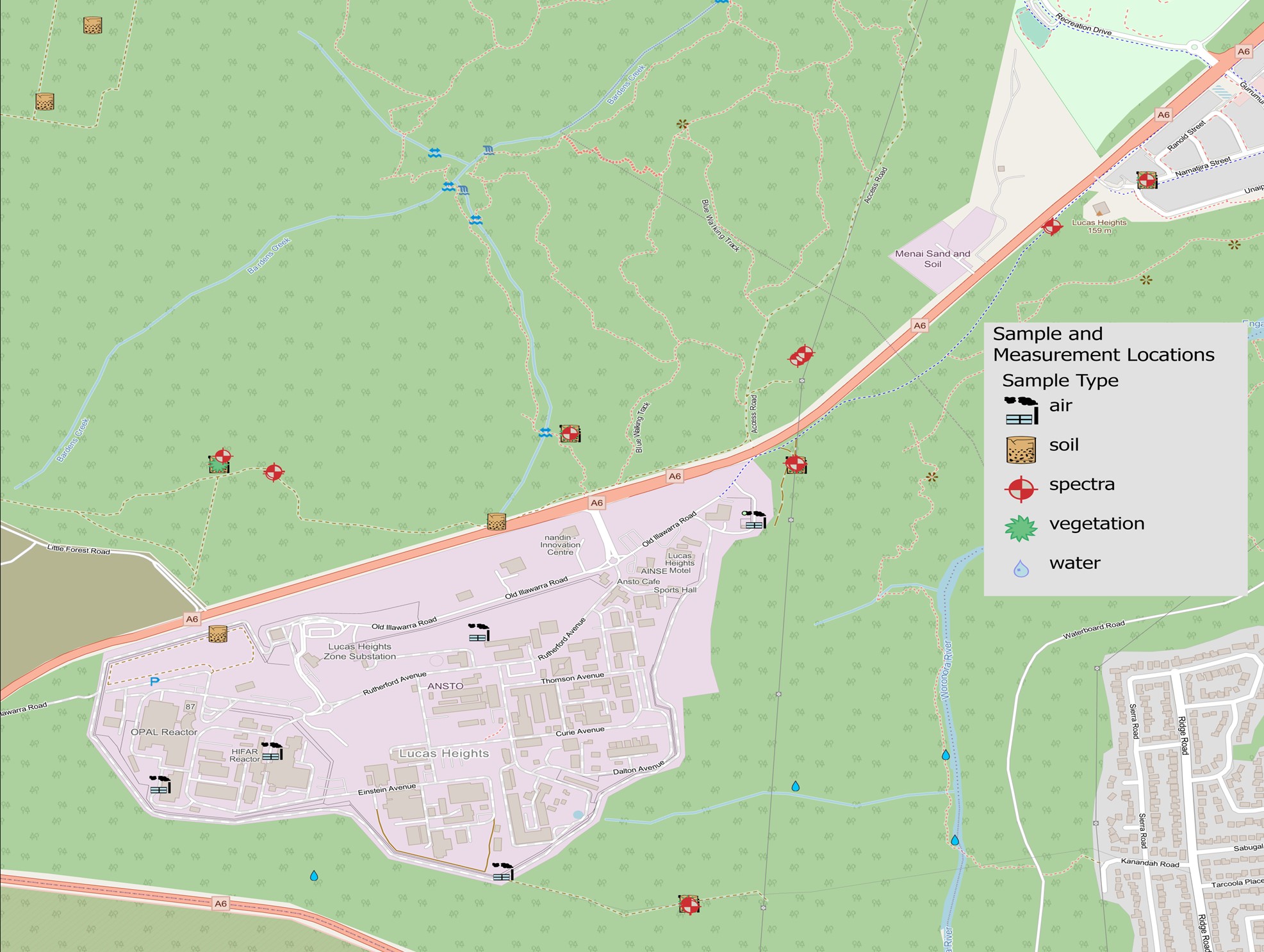 Figure 1: ANSTO site overview – Sampling locations are where ANSTO or ARPANSA have collected samples as part of the verification monitoring program.
Verification samples
ANSTO uses carbon cartridge air filters to collect radioactive particles in the air as part of its environmental monitoring program. Carbon cartridge air filters are collected each quarter and measured by ANSTO and then passed to ARPANSA’s Radiochemistry and Environmental Sciences Laboratory (RESL) for verification of measurements. The comparison of measured activity in each sample is presented here and shows that all samples were well below the notification level. Notification levels are based on the conservative dose constraint of ANSTO’s license conditions (0.3 mSv/year), which is well below the public exposure limit of 1 mSv/year. As a result, no human health effects or impacts to the environment are expected.
Stack filter activity comparison
| Stack ID | Sample Reference Date and time | ANSTO I-131 Activity (Bq/filter) | ARPANSA I-131 Activity (Bq/filter) | ARPANSA Measurement % of notification level |
| B23A-1st (Q2) | 12/11/2024 09:41:00 AM | 1.56 +/- 0.33 | 1.01 +/- 0.16 | 0.0000002 |
| B23A-2nd (Q2) | 12/11/2024 09:41:00 AM | 10.07 +/- 0.71 | 5.67 +/- 0.76 | 0.000001 |
| B23B (Q2) | 12/11/2024 09:41:00 AM | 2.836 +/- 0.43 | 1.24 +/- 0.2 | 0.00006 |
| B27 (Q2) | 12/11/2024 09:41:00 AM | ND | ND | ND |
| B88 RP-1st (Q3) | 18/02/2025 09:14:00 AM | 58.3 +/- 1.75 | 51.9 +/- 5.4 | 0.00003 |
| B88 RP-2nd (Q3) | 18/02/2025 09:15:00 AM | 1.56 +/-0.28 | 1.16 +/- 0.19 | 0.0000006 |
| B88 RS (Q3) | 18/02/2025 09:16:00 AM | 89.55 +/- 2.13 | 80 +/- 7.5 | 0.00004 |
| B88 BS (Q3) | 18/02/2025 09:14:00 AM | ND | 0.197 +/- 0.05 | 0.0000001 |
| B23A-1st (Q4) | 17/06/2025 09:40:00 AM | 2.883 +/- 0.38 | 2.21 +/- 0.34 | 0.0000004 |
| B23A-2nd (Q4) | 17/06/2025 09:40:00 AM | 1.087 +/- 0.24 | 0.61 +/- 0.14 | 0.0000001 |
| B23B (Q4) | 17/06/2025 09:49:00 AM | 0.8035 +/- 0.28 | 0.58 +/- 0.13 | 0.00003 |
| B27 (Q4) | 17/06/2025 12:23:00 PM | 2046 +/- 10.26 | 1659 +/- 150 | 0.02 |
| B88 RP-1st (Q4) | 01/07/2025 10:08:00 AM | 172.8 +/- 2.98 | 144 +/- 21 | 0.00008 |
| B88 RP-2nd (Q4) | 01/07/2025 10:08:00 AM | 1.134 +/- 0.24 | 0.42 +/- 0.10 | 0.0000002 |
| B88 RS (Q4) | 01/07/2025 10:10:00 AM | 376.3 +/- 4.35 | 310 +/- 42 | 0.0002 |
| B88 BS (Q4) | 01/07/2025 10:09:00 AM | 0.99 +/- 0.24 | 0.84 +/- 0.17 | 0.0000004 |
For all air filter samples, ARPANSA measured a lower activity than ANSTO’s reported numbers. For several of the low activity samples there are variations, which are due to differences in each lab’s gamma counting setup. Comparison between each result is still valid and demonstrates continued compliance by ANSTO with its discharge responsibilities.
Tritium concentration in groundwater bores
Water samples are collected from boreholes at the Little Forest legacy site twice a year by the ANSTO environmental monitoring team and, since 2021, a subset of these samples have been sent to ARPANSA for analysis and comparison. The results from both ANSTO and ARPANSA are in good agreement and have been for all samples since 2021. None of the water from these boreholes is contributing to a water source and is not fit for human consumption due to non-radiological contaminants such as bacteria. While it is not suitable for consumption, it has been compared against the World Health Organization (WHO) drinking water guidance limits to give context to the level of radioactivity present. All activity concentrations are well below the World Health Organization (WHO) drinking water guideline limits for tritium at 10,000 Bq/L and below the gross alpha and beta (GAB) screening level of 0.5 Bq/L for drinking water.

Figure 2: Tritium concentration in borehole water at Little Forest Legacy Site 2021-25
Environmental Radiation Monitoring System (ERMS) results
An environmental gamma dose rate detector is fixed in place at ANSTO. For the reporting period (12 months) this had better than 95% availability of data. The mean dose rate measured by the detector was 0.1 µSv/h with a standard deviation of 0.005.. A maximum dose rate of 0.2 µSv/h was recorded on 09/12/2024 at 16:50:00. This maximum was detected for less than 30 minutes and does not represent a release above investigation levels, which are 1 µSv/h.
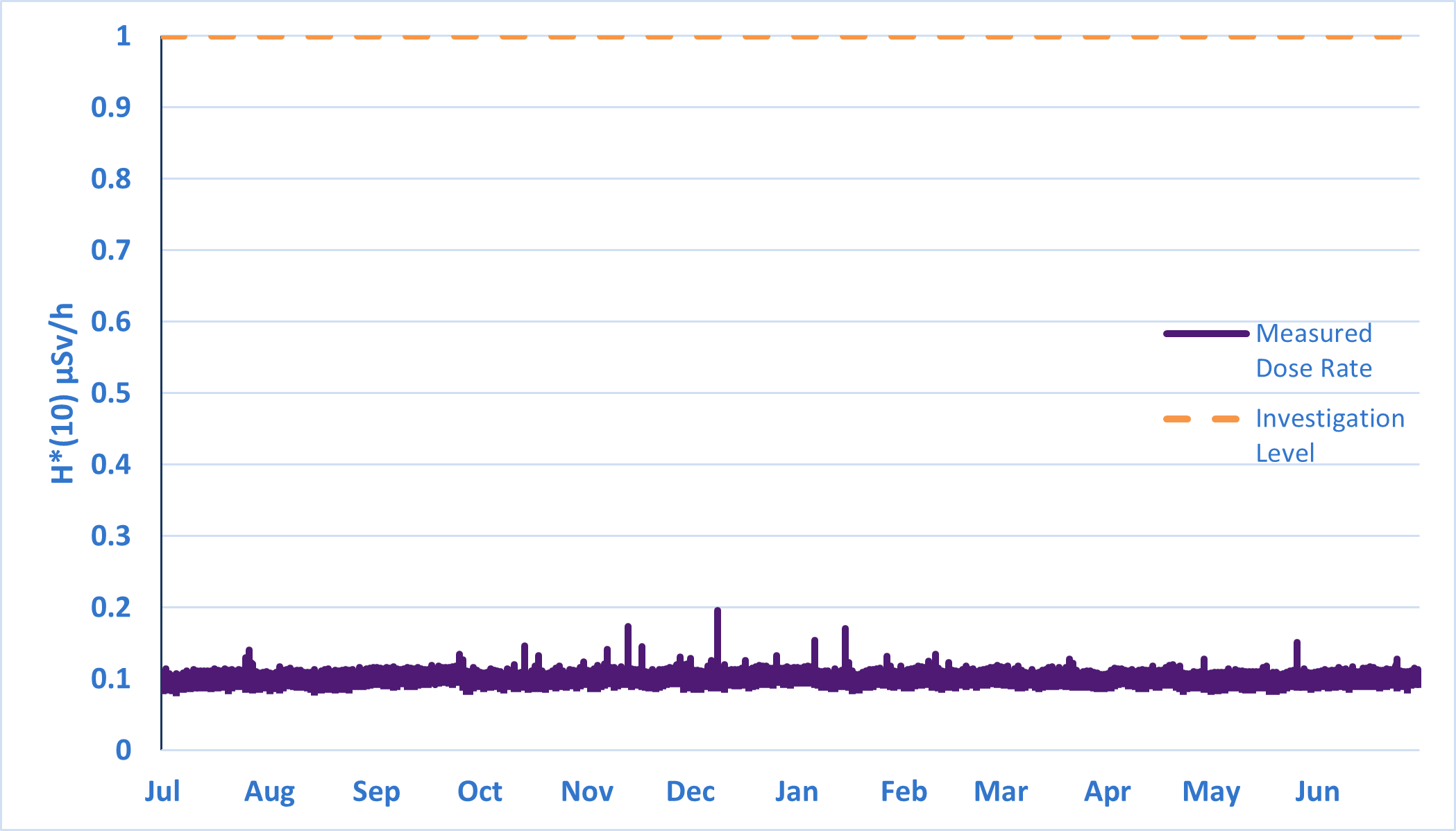 Figure 3: Measured dose rates of the ERMS probe for July 2024 to June 2025
Current dose rates for a variety of Australian locations, including ANSTO, can be viewed as part of RADMAP-Aus on the ARPANSA website.
Conclusion
ARPANSA’s independent measurements at ANSTO’s Lucas Heights site have consistently found levels of radiation in the environment to be low and in line with natural background radiation levels. Our measurements show good agreement with ANSTO measurements and demonstrate that ANSTO is fulfilling their duties as a licence holder to protect the people and the environment from the harmful effects of radiation.